
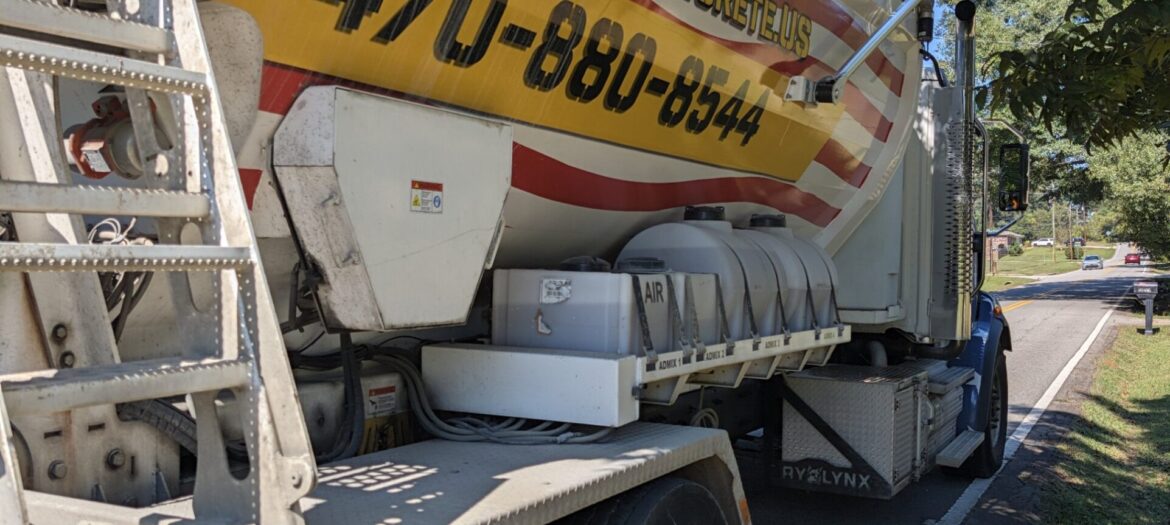

Posted by Quick Mix Concrete Delivery
You need three yards. You have called four suppliers. Two said no outright, one quoted a number that made no sense, and the fourth said they would call you back and never did.
It is not you. Here is what is actually happening on the other end of that phone.
A drum truck is built for 10 yards, not 3
The mixer trucks you see on the road hold around 10 cubic yards. That truck, its driver and its fuel cost the same to send out whether it is full or carrying a quarter of a load. A supplier running a 3 yard delivery is running a 10 yard route and collecting a third of the revenue.
So the dispatcher is doing arithmetic every time a small order comes in. Can that truck be doing something better for the next two hours? On a busy day, almost always yes. The small order loses.
Opening the plant is its own cost
A batch plant is not a light switch. Running one means staff, power, aggregate handling, water, washout and testing, and all of it has to be paid for by the yardage that goes out the gate that day.
When the plant is already running for a 60 yard commercial pour, squeezing in your 3 yards is just awkward. When the plant is not running, for a weekend, an evening, or an off season weekday, opening it for 3 yards is a straightforward loss. That is why “we are not batching that day” is the answer so often, and it is also why the no gets firmer the smaller and the odder your job is.
The 90 minute clock
Concrete begins curing the moment water meets cement. The industry works to roughly a 90 minute window from batching to placement, and some specs are tighter.
That clock is the supplier’s risk, not yours, but they price it like a risk. A small load that sits in a drum while the driver crosses town in traffic can arrive out of spec, and if it does, somebody is eating a load of concrete. Short load fees exist partly to cover that exposure.
Leftover concrete is a real problem
Order 3 yards from a plant and you get 3 yards, batched before the truck left. Pour 2.5 and the rest is the supplier’s problem to wash out and dispose of, and that disposal costs money and is increasingly regulated.
This is also why plants resist mid-job changes. You cannot add half a yard to concrete that was mixed twenty miles away.
What a volumetric mixer changes
A volumetric truck is a different machine. It carries sand, stone, cement and water in separate compartments and mixes concrete on site, as it comes out of the chute.
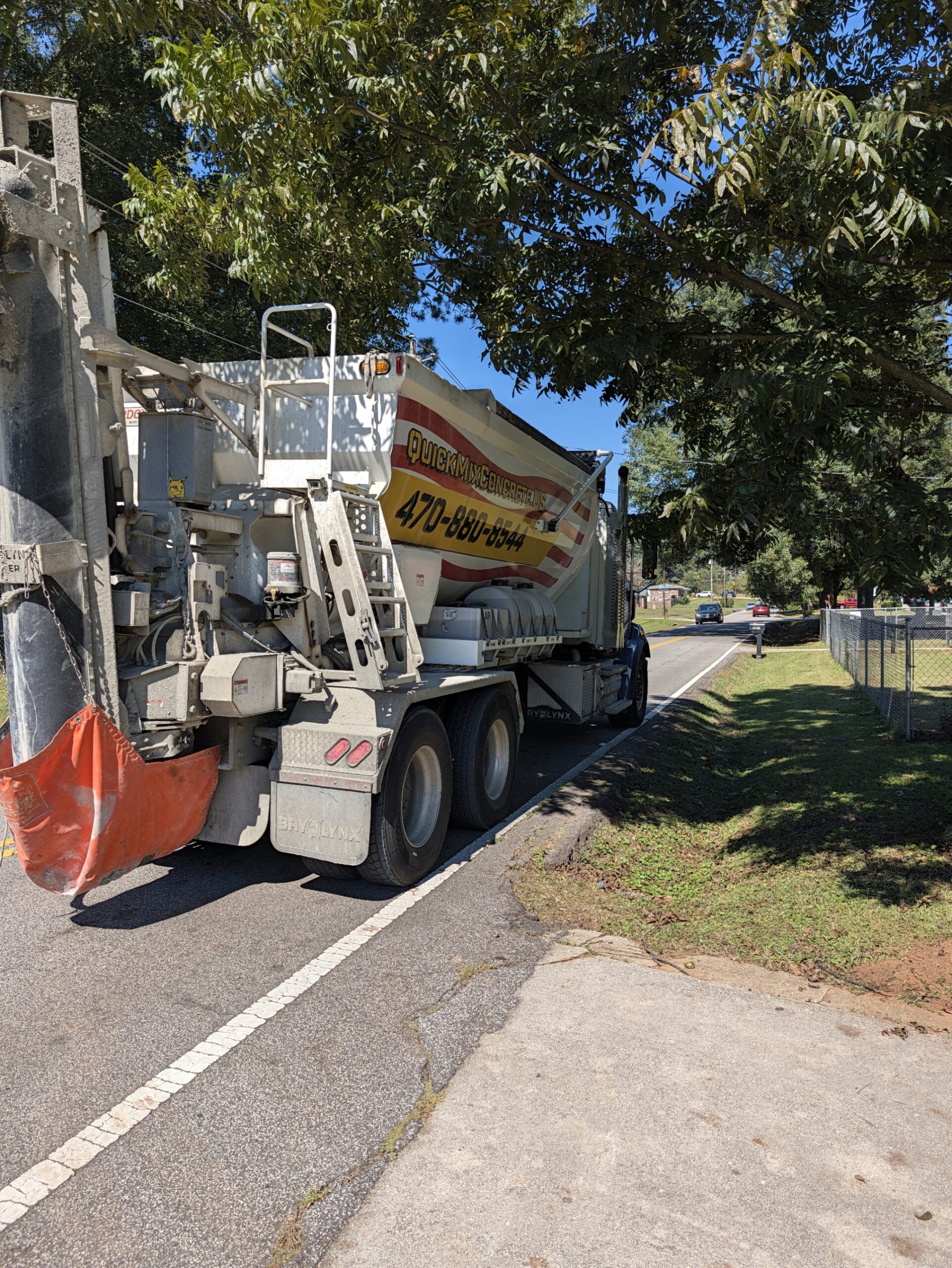
That one difference undoes most of the problems above:
- No plant has to open. The materials ride on the truck. A Saturday is the same as a Tuesday.
- No 90 minute clock. Nothing is mixed until it is at your job, so travel time is not curing time.
- No minimum driven by a drum. We will bring you 1 yard. Yardage is sold in half yard increments.
- Changes mid pour are possible. Short by half a yard? We mix it right there.
- The mix can change on site. Strength, fiber, accelerator or retarder can be adjusted for conditions rather than locked in at a plant an hour earlier.
This is why we take the jobs that get declined elsewhere: pavement and pothole repairs, utility line installs, storm drain work, trench backfill, footings, sidewalks, curbs, equipment pads, and the residential pours that are too big for bags and too small for a drum truck. Small work of roughly 10 yards and under is what we are built for, and we are set up for nights and weekends. There is more on the odd hours side in our write up on after hours road and utility pours in Atlanta.
Small loads still cost more per yard, and here is why that is honest
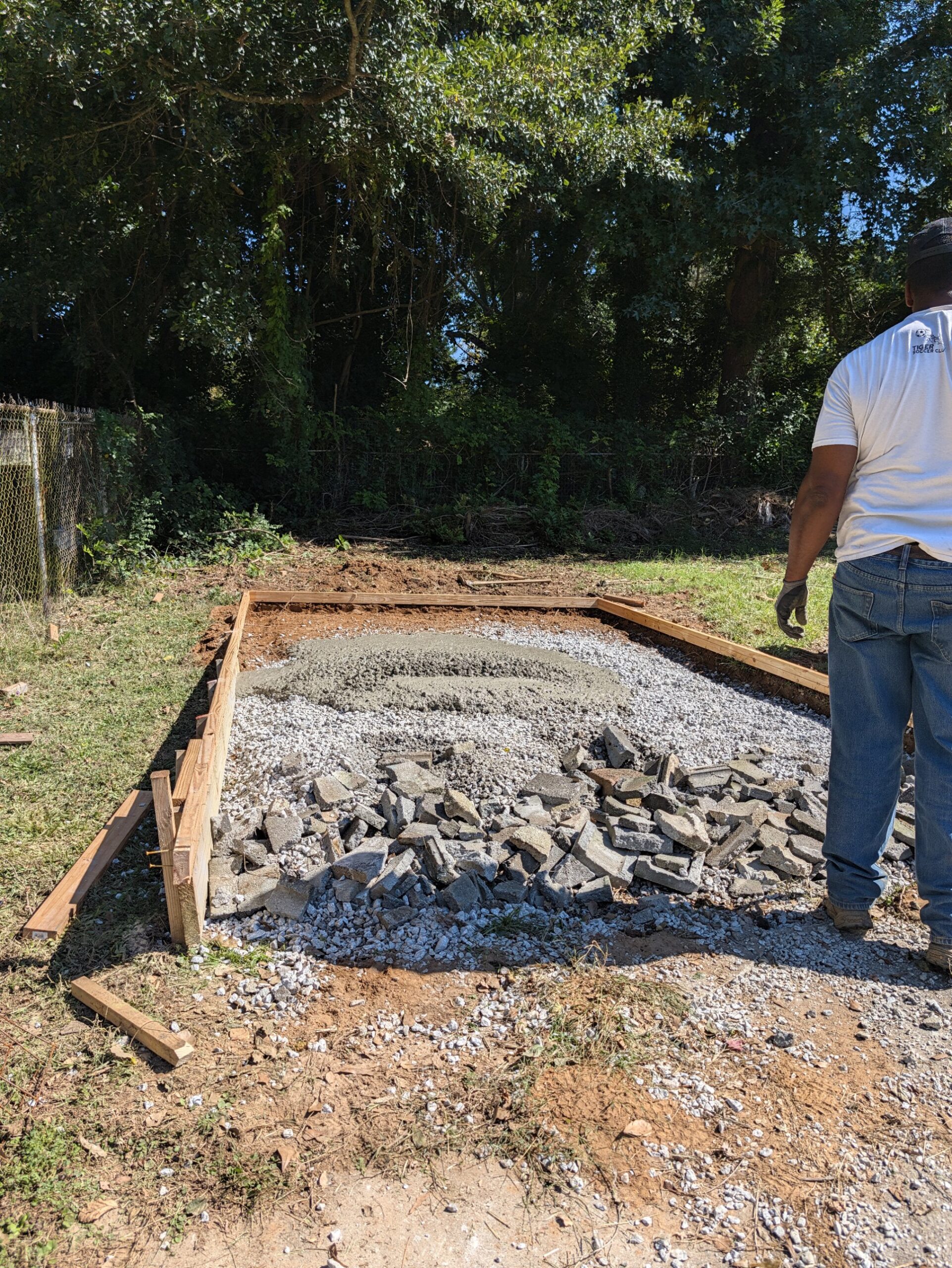
We will not pretend the economics vanish. Sending a truck and a driver to your address costs what it costs, so a small delivery carries a short load fee and a fuel charge on top of the per yard price. On a 2 yard job those fees are a big share of the bill.
What changes is that the job is possible at all, and that the price reflects a truck coming to you rather than a plant being opened for you. Our full numbers are published on our pricing page, and we break down what a small delivery actually costs in how much a short load of concrete costs in Atlanta.
If you have been told no
Call us with the yardage, the address, the mix if you know it, and your window. If the job is genuinely too big for us or outside our service area we will tell you straight away rather than take a week to not call you back.
Call or text (470) 880-8544 or send us a message.
Doing demo before the pour? Our sister company handles the debris: Bin There Dump That Atlanta.